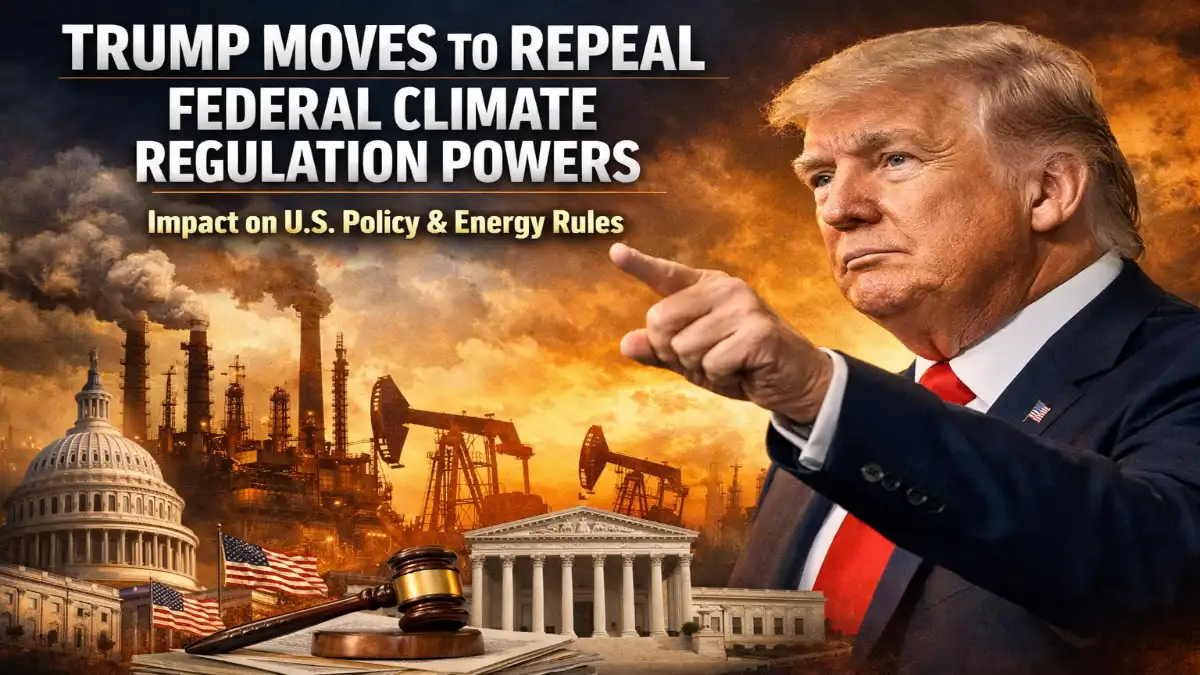
Former President Donald Trump has moved to roll back key federal authorities used to regulate climate-related emissions, signaling a major shift in U.S. environmental and energy policy. The proposal aims to limit the federal government’s role in setting nationwide climate standards and expand state and industry flexibility.
The move is expected to trigger legal challenges and reignite debate over the balance between environmental protection and economic growth.
What Authority Is Being Targeted?
At the center of the proposal is the regulatory framework built under the Environmental Protection Agency, which has used provisions of the Clean Air Act to regulate greenhouse gas emissions from power plants, vehicles, and industrial sources.
Previous court rulings have affirmed that greenhouse gases can be regulated as pollutants under federal law. However, the new approach seeks to reinterpret or narrow that authority, potentially shifting more decision-making power to states.
Why This Is Significant
Climate regulation affects multiple sectors of the U.S. economy, including:
- Power generation
- Oil and gas production
- Automotive manufacturing
- Renewable energy investment
Reducing federal oversight could lead to fewer nationwide emissions standards, allowing states to set their own policies. Supporters argue this could lower compliance costs for businesses and strengthen domestic energy production. Critics warn it could slow efforts to reduce carbon emissions and meet climate goals.
Impact on Energy Rules
Energy producers may see changes in:
- Power plant emissions limits
- Methane regulations for oil and gas
- Vehicle fuel efficiency standards
- Federal permitting requirements
A rollback of federal climate authority could ease regulatory burdens on fossil fuel industries while potentially slowing the expansion of certain clean energy mandates.
Legal and Political Challenges Ahead
Any significant shift in climate regulation authority is likely to face legal scrutiny. Environmental groups and some state governments may challenge the move in federal court, arguing that existing laws require the government to regulate harmful emissions.
The Supreme Court has previously weighed in on the scope of federal environmental authority, making future court rulings a critical factor in determining how far any rollback can go.
In Congress, lawmakers remain divided. Some support reducing federal climate oversight to encourage economic growth, while others argue for stronger nationwide standards to address climate risks.
Broader Policy Implications
If implemented, the shift could:
- Reshape federal environmental enforcement
- Increase regulatory variation between states
- Influence global climate negotiations
- Affect long-term energy investment strategies
Investors, state governments, and industry leaders will closely monitor how regulatory changes evolve and whether they withstand judicial review.
What Happens Next
Policy adjustments typically move through rulemaking procedures, including public comment periods and agency reviews. Legal challenges could delay or modify implementation.
For now, the proposal marks a renewed debate over the role of federal government in climate oversight and energy policy.
Final Thoughts
The effort to repeal or limit federal climate regulation powers represents a significant potential turning point in U.S. environmental policy. Supporters frame it as a move toward economic flexibility and state control, while opponents warn of environmental and public health risks.
As legal battles and political negotiations unfold, the long-term direction of U.S. climate and energy rules will remain a central issue in national policy discussions.