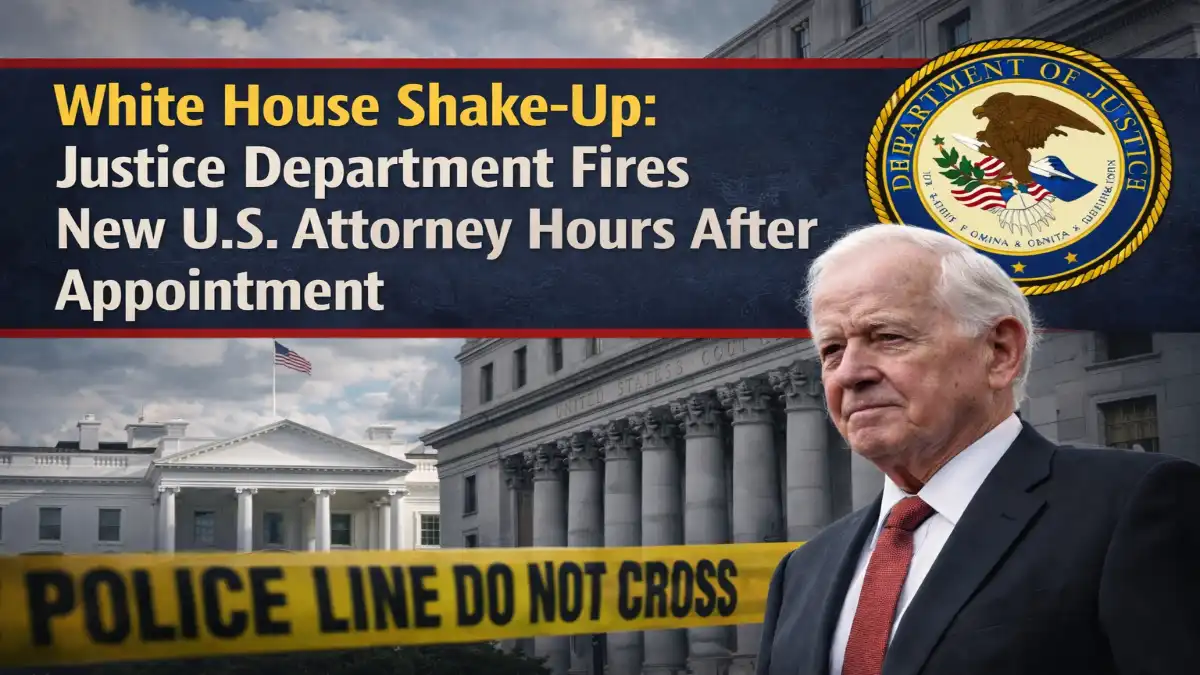
A sudden leadership change inside the U.S. Department of Justice has sparked national debate after a newly appointed U.S. attorney in New York was removed just hours after being sworn in. The rapid reversal highlights growing tensions over who holds authority to appoint federal prosecutors when vacancies arise.
The decision has drawn attention from legal experts, lawmakers, and political observers across the country.
What Happened
Federal judges in New York had appointed an interim U.S. attorney after the previous acting official’s term expired. Under federal law, district court judges are permitted to name a temporary replacement if a vacancy remains unfilled after a specified period without Senate confirmation.
However, shortly after the appointment was finalized, the Justice Department stepped in and removed the newly appointed official. Administration officials argued that the authority to appoint U.S. attorneys ultimately rests with the president under Article II of the Constitution.
The removal occurred within hours of the swearing-in ceremony, making it one of the fastest reversals of a federal prosecutor appointment in recent years.
Why the Appointment Was Contested
The dispute centers on the legal framework governing interim U.S. attorney appointments.
Normally:
- The attorney general may appoint an interim U.S. attorney for a limited period.
- If no Senate-confirmed nominee is approved within that timeframe, federal district judges can appoint a temporary replacement.
In this case, judges exercised that authority after the previous interim term expired. The Justice Department, however, maintained that executive authority supersedes judicial selection in such circumstances.
Political and Legal Implications
The incident raises broader questions about the balance of power between the executive branch and the judiciary.
Legal analysts note that while statutes provide judges with temporary appointment authority, constitutional interpretation remains central to disputes over executive power. The White House position emphasizes presidential control over federal prosecutors, while critics argue that congressional statutes were designed to prevent prolonged vacancies.
The situation could prompt further legal clarification or even congressional review if similar disputes continue in other districts.
Impact on the U.S. Attorney’s Office
The Northern District of New York handles a wide range of federal cases, including public corruption, financial crimes, drug trafficking, and national security matters. Leadership instability may create short-term administrative uncertainty, though career prosecutors typically continue daily operations without interruption.
Officials have indicated that interim leadership arrangements will remain in place until a Senate-confirmed nominee is approved.
Broader Context
This episode comes amid increased national scrutiny over federal prosecutor appointments. In recent years, interim appointments have occasionally sparked legal challenges, particularly when confirmation processes stall in the Senate.
Observers say the latest move underscores how politically sensitive high-profile Justice Department roles have become.
What Happens Next
The White House is expected to nominate a permanent U.S. attorney for Senate consideration. Until confirmation occurs, the district may continue operating under acting leadership designated by the Justice Department.
Whether courts revisit the legality of similar appointments in other districts remains to be seen. For now, the rapid firing has intensified debate over constitutional authority and the limits of judicial appointment power.