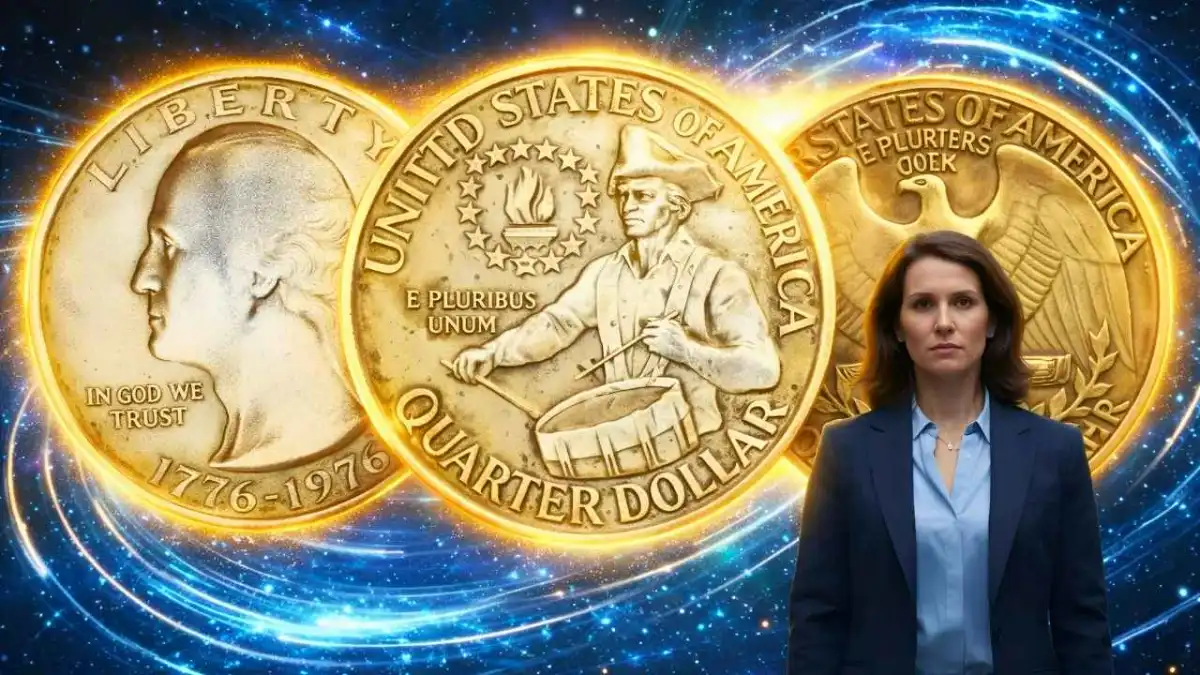
The 1776–1976 Bicentennial Quarter remains one of the most collected modern U.S. coins in 2026. Originally issued to celebrate America’s 200th anniversary of independence, this special dual-dated quarter continues to generate strong interest among collectors.
While most Bicentennial Quarters are worth face value, certain rare errors, silver varieties, and high-grade examples can command significant premiums. Here is a complete 2026 value guide for U.S. collectors.
Why the 1776–1976 Quarter Is Different
In 1976, the United States Mint released special commemorative quarters featuring the dual date “1776–1976” instead of a single year.
The reverse design, created by Jack L. Ahr, features a Colonial drummer with a torch encircled by 13 stars representing the original colonies. The obverse keeps the familiar portrait of George Washington.
More than 1.6 billion Bicentennial Quarters were minted across Philadelphia, Denver, and San Francisco, making most examples common. However, specific varieties stand out in today’s market.
2026 Bicentennial Quarter Values by Type
1. Clad Bicentennial Quarters (No Mint Mark or D Mint Mark)
These are the standard copper-nickel clad quarters produced for circulation.
Average circulated condition
$0.25 to $1
Uncirculated (MS65–MS66)
$5 to $25
High grade (MS67 and above)
$500 to $7,000 depending on certification and population
Coins graded by leading services such as Professional Coin Grading Service and Numismatic Guaranty Company typically command stronger prices.
2. 1976-S Silver Bicentennial Quarters
The San Francisco Mint produced special 40 percent silver versions for collectors. These were sold in proof and uncirculated sets and were not released for general circulation.
Silver uncirculated examples
$8 to $20
Silver proof coins (PR69)
$15 to $40
PR70 Deep Cameo examples
$100 to $1,000 or more depending on market demand
Silver content gives these coins additional intrinsic value, especially when silver prices rise.
Rare Bicentennial Quarter Errors Worth Money
Error coins are where the real value potential lies. Some documented and desirable errors include:
Double die obverse
Visible doubling in lettering or date
Off-center strike
Partially misaligned design
Clipped planchet
A portion of the coin missing due to minting error
Wrong planchet error
Struck on a different metal intended for another denomination
Major die cracks or retained cud errors
Certified major errors can range from $150 to $25,000 depending on severity and uniqueness. Dramatic, one-of-a-kind examples may bring even higher auction results.
Could a Bicentennial Quarter Be Worth Thousands in 2026
Yes, but only under specific conditions. A coin must typically meet one or more of the following:
- Exceptional Mint State grade (MS67 or MS68)
- Rare mint error
- Silver composition in flawless condition
- Low population certified example
Most circulated quarters found in pocket change remain worth face value. However, pristine coins preserved for decades can carry significant premiums.
How to Check If Your Bicentennial Quarter Is Valuable
Check the mint mark
Look for D (Denver) or S (San Francisco). Silver versions are typically marked with S.
Inspect the edge
Silver quarters do not show the copper stripe seen on clad versions.
Look for errors
Use magnification to examine lettering, strike alignment, and unusual features.
Consider professional grading
Authentication increases credibility and resale value.
2026 Market Outlook
The market for modern collectible U.S. coins remains stable in 2026, with continued demand for certified high-grade and error coins. Bicentennial Quarters remain popular due to their historical significance and recognizable design.
Collectors focusing on quality, rarity, and verified certification are most likely to see strong returns.
Final Thoughts
The 1776–1976 Bicentennial Quarter is one of America’s most iconic commemorative coins. While most examples are common, rare errors, silver varieties, and high-grade certified coins can be worth hundreds or even thousands of dollars in 2026.